
Buying guide · Luxury and informed shopping
Buying luxury on a budget starts with a straightforward decision: what do you want to enjoy, and how much can you comfortably spend? A watch, handbag, piece of jewelry, or premium device might appeal to you for very different reasons. To choose well, look beyond the brand and the advertised price. Find out who is selling it, exactly what you would receive, what evidence supports the description, and what it would cost to get the item ready to use.
If you arrived here searching for affordable luxury, this guide will help you turn that broad idea into a specific purchase you can evaluate. A lower asking price alone does not make something a good buy. The difference often comes down to details that take up just one line in a listing: a repair that is still needed, a replaced component, a size that is difficult to alter, or a return policy that works differently than you expected.
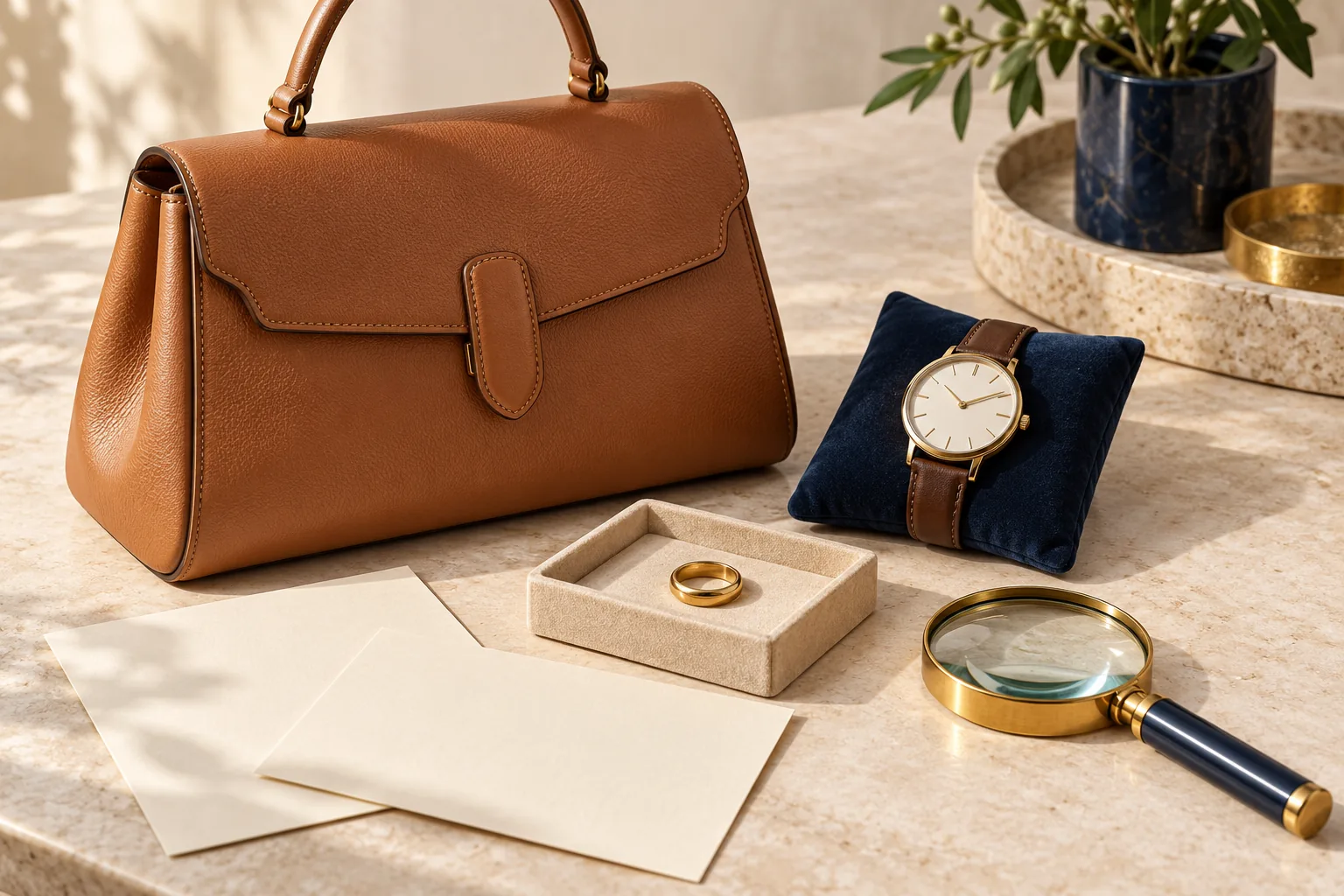
Start with how you will use it, then set an all-in limit
Before choosing a brand, write down what you want the item to do. An everyday handbag needs a capacity, closure, and weight that may be completely different from those of a bag for special occasions. A watch you plan to wear at work raises different questions from one you want for sports. With electronics, compatibility with your apps may matter more than a premium label.
Next, separate your requirements from your preferences. You might need a strap in a particular size but be happy with a different dial color. You might want a specific metal for a piece of jewelry without needing a particular collection. That flexibility lets you compare alternatives that serve the same purpose while keeping your standards for provenance, function, and seller information.
Separate the purchase price from the cost of getting started
Your limit should cover what you need to begin enjoying the item: delivery, adjustments, essential accessories, and any work you already know it needs. Also allow an amount you can afford for maintenance. There is no universal percentage. A simple cleaning, a watch service, and a battery replacement are different jobs that need their own estimates.
A practical approach is to write down two numbers: the most you can spend overall and the most you can pay for the item after allowing for everything else. If a purchase only fits your budget when you assume there will be no additional expenses, you probably need more information before moving forward.
Compare the buying channel and who stands behind the sale
Different sellers offer different experiences. A brand boutique, an authorized retailer, a secondhand business, and a private individual might advertise seemingly similar items with very different paperwork and terms. Identify the person or business you would be buying from first. Then compare what each offer actually includes.
For secondhand goods, phrases such as “like new,” “excellent,” and “very good condition” need a specific explanation. Ask what flaws each grade permits and request photos of the actual item you would receive. A stock image can help identify a model, but it cannot establish the condition of a particular example. You should also distinguish between refurbishment by the original brand and work done by another repairer.
| What to check | A useful question | Why it matters |
|---|---|---|
| Seller identity | Who issues the invoice and handles problems? | You know who you are buying from and whom to contact. |
| Actual condition | What wear, repairs, or replaced parts does this item have? | You can decide whether its condition suits your plans. |
| Documentation | Which original documents or reports are included? | You can examine the evidence behind the description. |
| Outstanding expenses | Does it need sizing, servicing, a battery, or accessories? | The answer may change your maximum purchase price. |
| Returns and warranty | Which exact terms apply to this transaction? | You avoid relying on another seller's or product's terms. |
If you are exploring PakaPuka, use the online shop to examine the information in individual listings and read the frequently asked questions to understand the service. Mentioning a brand in this guide does not mean that it is currently available in the catalog or that any particular offer exists.
Authenticity claims need evidence you can understand
A box, a visible reference number, or a photograph of an invoice can provide context. None should be treated as a standalone answer to every question about a purchase. Ask who examined the item, what they checked, and how their conclusion identifies that particular piece. If the seller offers an authenticity guarantee, request the written terms and find out how a disagreement would be handled.
Brand policies vary. Hermès explains that it guarantees authenticity for purchases through its official channels and authorized distributors, and that it cannot guarantee or verify items bought outside an official point of sale. Do not assume that any boutique will certify an item bought from a third party. Read the brand's official authentication information before relying on that possibility.
Rolex describes a specific program, Rolex Certified Pre-Owned, involving checks in its workshops and particular documentation. This does not make every used Rolex watch part of that program. If a seller uses that designation, examine what supports the claim and compare it with the official certification process.
Understand what each document actually tells you
An invoice records a transaction. A service receipt describes work performed. A report may assess particular characteristics. Ask for readable documents and check that their references are consistent with the object being sold. If something is missing, have the seller explain that limitation before you pay. There is no need to circulate a previous owner's complete personal details when appropriately redacted copies can support the relevant checks.
For a significant purchase, an independent specialist's inspection may be useful before you commit, provided the seller agrees and you understand the service. Ask what happens if the inspection is inconclusive. A professional opinion can add valuable information, but you should understand both its scope and the responsibility accepted by the person issuing it.
What to check in watches, handbags, jewelry, and premium electronics
Watches: fit, service history, and included parts
Start with the reference and measurements, including case diameter, thickness, and available bracelet length. Find out how many links are included, whether the strap needs replacing, and when the last documented service took place. Request clear photos of the case, dial, clasp, and bracelet. These can help you assess exterior condition, although they do not replace an examination of the movement.
If parts have been replaced, ask which ones and who performed the work. Both function and configuration may matter to your decision. Also avoid assuming that a used watch still has the water resistance you need: ask for relevant test information. You can explore watches on PakaPuka to learn about that section, while reading the rules of the specific auction format before participating.
Handbags: look closely at the areas that take the most wear
Check corners, handles, edges, lining, stitching, zippers, and fasteners. Request photos in even lighting and close-ups of worn areas. Ask specifically about odors, interior stains, loss of shape, repairs, and color changes. Touch-up work may improve an item's appearance, but you need to know it has been done to assess what you are buying.
Dimensions matter more than you might expect. Compare usable space with what you carry and check the handle or strap length. An attractive dust bag or packaging is not the same as verification of provenance. If the handbag needs treatment, establish whether the work is feasible and what it will cost beforehand. Different materials respond differently to cleaning and restoration.
Jewelry: materials, measurements, and a precise description
Ask for a description identifying the metal, dimensions, and relevant gemstone characteristics, where applicable. Check clasps and settings, and find out whether the size can be altered. If a gemological report is supplied, look at who issued it, what it covers, and how it relates to the piece. Do not treat a report about one stone as confirmation of every feature of a complete piece of jewelry.
For an item you plan to wear, think about comfort and care as well. A delicate design may need more attention than a simpler piece. If you are exploring categories, the jewelry section is a starting point. It does not replace the individual description or the terms for acquiring a particular item.
Premium electronics: prioritize function over appearance
Confirm the exact model, capacity, connectivity, and included accessories. For a used device, ask about battery condition, repairs, damage, and functional testing. Check that it can be set up with your account and used with your carrier or services. A device that looks pristine may still fail to meet your needs if it has account restrictions or components requiring attention.
Also consider how long you want to use it. An earlier model might suit you if it remains compatible with the tools you need. A newer one could still lack a specific feature. Consult the manufacturer's documentation for the exact model under consideration rather than transferring specifications from a different generation.
Calculate the full cost using figures you can verify
A useful comparison adds the item price, delivery, applicable taxes or import charges, any fees, adjustments, and known repairs. Then include maintenance you can already obtain an estimate for. If an expense is unclear, mark it as unresolved. Entering zero just to finish the calculation creates a misleading impression of certainty.
Here is a purely hypothetical example in US dollars: an item advertised for $700 with $25 delivery and an $80 adjustment estimate comes to $805 before any other applicable costs. Another item at $780 that already includes delivery and the same adjustment would not be more expensive under those assumptions. These figures are neither market prices nor offers. They simply show why listings need to be compared on the same basis.
Be careful with discount percentages based on an unclear reference price. Ask what the comparison is measured against and whether it concerns the same version, condition, and accessories. Also avoid budgeting on the assumption that you will recover a particular amount when reselling. Future value depends on circumstances you cannot guarantee when buying.
Considering an auction? Identify the costs of that format
Auction formats do not all work the same way. Before participating, understand which actions cost money, what the conditions for obtaining an item are, and which further payments might apply. Include participation spending in your limit even if you do not ultimately acquire the item. Read the relevant PakaPuka guides for the specific format. A displayed price alone is not enough to establish your total outlay.
One distinction is essential when exploring PakaPuka: under its currently documented rules, ordinary public and private auctions do not award items to human participants. Links to those categories help explain the service; they are not a route to buying an item by winning those auctions. To acquire something, check a separate purchase option, its availability, and its full cost before spending.
Before paying, check the terms and save the evidence
Keep the description, relevant photos, final quote, and the seller's answers. Check that your invoice will identify the item and that delivery arrangements are clear. For shipped orders, ask how to document problems and who handles a claim if the package arrives damaged. When considering a transaction on PakaPuka, consult its delivery, shipping, and returns guide as well.
A separate note for purchases covered by EU consumer rules
The following information concerns the European Union; it does not describe US consumer law. Your Europe distinguishes purchases from professional traders from purchases from private individuals: the same EU consumer protections do not cover both. Its guidance also explains protection for secondhand goods bought from traders and general distance-purchase withdrawal rules, subject to exceptions. Check the country, seller status, and rules relevant to your transaction in the official EU shopping rights guide.
Your final check can be brief: do I understand what I will receive? Have my important questions been answered? Does the full cost fit my budget? If any answer is no, pause. Missing an apparent opportunity is preferable to taking on a purchase you do not understand. The aim is to enjoy the item after making a decision you can explain with facts.
Frequently asked questions about buying luxury on a budget
Should I buy luxury goods new or secondhand?
That depends on your plans, the item's actual condition, and the terms offered. Compare equivalent examples and calculate the full cost. Secondhand purchases call for particular attention to wear, previous work, and the available documentation.
Do an invoice and a box prove an item is authentic?
They cannot answer every question on their own. Check that the paperwork corresponds to the item and understand who stands behind authenticity claims. If there is significant uncertainty, arrange an appropriate check before paying.
How much should I set aside for maintenance?
Get an estimate for the specific item and work. There is no single allowance that suits watches, leather goods, jewelry, and electronics. If necessary maintenance pushes the purchase beyond your limit, look for an option you can comfortably afford.
Does a luxury brand guarantee I can recover my money when selling?
No. Demand, condition, selling costs, and other factors can change. Choose according to the use you expect to get from the item and an amount you can afford without depending on a future resale.
Does this guide authenticate PakaPuka products or announce discounts?
It does neither. This is an editorial guide to preparing for an informed purchase. Availability, documentation, prices, and terms need to be checked in the listing and with the party responsible for the transaction.