
Choose a movement that fits the way you wear a watch
Choosing between an automatic and a quartz watch starts with what you want to happen when you put it on. You might want to check the time and leave without another thought. You might enjoy winding a watch, setting its date, and understanding the mechanism. Both preferences make sense. Trouble starts when you buy a label and discover afterward that you do not enjoy the routine that comes with it.
This guide compares movement types before you narrow the search to particular references. It focuses on everyday use, setting the watch, and the cost of owning it. It is not a ranking of brands, a secondhand inspection checklist, or a prediction of resale value. Accuracy, running reserve, and service costs need checking for the individual model rather than borrowing a claim from the entire category.
Start with an ordinary morning
Think about when you put on your watch and how much attention you want to give it. If you often leave in a hurry and dislike checking an accessory every time you pick it up, record that preference. If preparing a mechanism is part of the appeal, write that down too. You are choosing something to live with, not trying to pass a test about being a watch enthusiast.
Separate requirements from things you would simply enjoy. Clear time display and a crown you can operate comfortably might be requirements. A display back that lets you see the movement might be a pleasure. Neither is settled by the word automatic or quartz. The dial, hands, functions, and case design also influence how the watch works for you in practice.
Decide how you will recognize a good fit. You could consider whether setting the date feels manageable, whether you remember the setup sequence, or whether you would rather avoid frequent intervention. A short list of observable expectations helps you rule out unsuitable options. It also prevents personal preferences from turning into supposedly universal rules about what everyone should buy.
Understand the difference without turning it into a hierarchy
A mechanical automatic watch stores energy in a mainspring and has a winding system that responds to wrist movement. Grand Seiko's explanation of mechanical movements describes the role of the spring, gear train, and regulating mechanism. You do not need to learn how to repair one before deciding whether that kind of ownership appeals to you.
In a conventional battery-powered analog quartz watch, electronic regulation and a motor control the hands. Grand Seiko explains the principle through its 9F quartz movement. That example belongs to a particular movement family rather than defining the performance of every quartz watch. It also demonstrates why the name of the system cannot tell you everything about construction or finishing.
This comparison concerns mechanical automatics and conventional analog quartz watches. If a candidate uses a different source of power or regulating technology, read its own instructions. Do not assume that every automatic supports the same manual winding procedure either. The caliber matters, so find the manufacturer's explanation before turning a crown according to advice intended for another movement.
Compare three patterns of use that resemble real life
One watch you wear frequently
If you expect to use the same watch regularly, ask how its operation fits your routine and what the manual says about starting it. A desk-based day and a day involving more movement are different patterns. There is no need to predict a result from your job title. Understand the procedure and observe whether actual operation fits the information for that reference.
For a quartz candidate, check its intended power supply, any indicators described by the manufacturer, and the available service when attention is needed. Wanting a straightforward routine does not mean expecting to ignore the watch forever. Its case, bracelet, clasp, and intended conditions of use still deserve attention, whichever system regulates the time.
Several watches you alternate
If you change watches often, the useful question is what you must do when picking each one up again. An automatic that has exhausted its running reserve needs the appropriate restart and setting procedure. Consider whether you enjoy repeating that process and how its functions affect the task. A photograph of the dial alone does not answer the question.
In this situation, compare the movement alongside the calendar and any other displays. You might prefer fewer functions because they suit your routine, or happily spend time preparing a particular piece. Assess both possibilities without inventing an hourly cost for your attention. Likewise, avoid adding accessories to the shopping list before knowing which actual inconvenience they would address.
A watch saved for occasional use
For a watch you wear only occasionally, picture getting ready for a dinner or celebration. Would you like to pick it up and verify its displays with relatively few steps? Would you enjoy spending time setting it up? That is a personal choice. A collection requiring more attention is not automatically better, and convenience does not make a purchase less worthwhile.
If you are buying a gift, consider the person who will wear it. They may love the appearance while preferring a different routine from yours. Asking about their intended use helps you choose a movement for their experience rather than for the buyer's sense of occasion. The budget should reflect that person's needs and the ownership they will actually want.
Read accuracy claims with their units and conditions
Do not compare two sales descriptions without checking what their figures mean. One specification might state variation over a period different from the other. Record the unit, the stated conditions, and the caliber covered by each claim. Then compare equivalent quantities. The word accurate, standing on its own, does not explain what the specification allows you to expect.
Distinguish a manufacturer's published specification from an informal observation about someone else's watch. A comment about a week of wear may be interesting, but it does not replace the documentation for your candidate. If the listing and manufacturer give different information, ask about the discrepancy. Choosing the more attractive figure without an explanation does not resolve it.
Connect the information to your own tolerance for adjustment. You may be comfortable checking the time frequently or prefer a routine involving fewer corrections. Define that preference without assigning a universal promise to either movement category. If a particular use requires specific timekeeping performance, verify an applicable specification for the chosen reference and the conditions in which you intend to use it.
Ask a specific question about the days you will not wear it
An automatic's power reserve is not a promise that briefly wearing it will keep it running indefinitely. Check the value stated for the reference and any accompanying conditions. Seiko organizes its instruction manuals by caliber, which is a useful reminder to locate the correct instructions instead of borrowing those for a similar-looking watch.
As a hypothetical situation, imagine taking the watch off after work on Friday and using it again at the start of the next week. Ask what preparation that particular watch would need after such a break. This does not assign a universal running time to a weekend. The point is to relate the watch's documentation to a gap that actually occurs in your schedule.
For conventional quartz, consult the manual's guidance on its battery and replacement procedure. Do not translate no winding required into no service ever required. With either choice, keep the movement documentation and follow its setting and storage instructions. Improvising with the crown or calendar according to another brand's procedure is not a useful shortcut to learning your own watch.
A practical example of model-specific instructions is Seiko's winding guidance for calibers 8R46 and 8R48. It describes those movements, including their winding arrangements. Use the same approach for the reference you are considering rather than transferring that procedure to every automatic you encounter.
Compare buying the watch with continuing to own it
Separate four items: the price of the individual watch, any initial adjustment you need, known attention, and possible future work. Use estimates that apply to each reference and your service location. A figure found for a different watch cannot stand in for the expected cost of every automatic or every quartz model. If an amount is unknown, label it as an unanswered question.
Tissot's service information distinguishes movement families and different scopes of work. It illustrates why a minor intervention and a complete service are not the same purchase. Its prices and conditions apply to that service and market. They are neither a universal watchmaking tariff nor an estimate for a particular PakaPuka listing.
When requesting an estimate, establish whether it includes diagnosis, parts, shipping, and the checks you need. Ask what could change the amount and how further work would be authorized. In a useful comparison, unknown service cost is not entered as zero. It is missing information that may justify another conversation before you commit your entire budget.
Also compare what the initial price includes. If movement, size, materials, and bracelet all change at once, the difference does not represent the mechanism alone. Keep a column identifying those changes. You can then see whether you are paying for something you value instead of assigning the whole price difference to one word in the description.
Choose a comparison period consistent with how you intend to own the watch, while keeping uncertain future events separate from known work. A service quotation does not establish how often every intervention will be needed. Preserve that uncertainty rather than creating a neat annual figure from assumptions. The aim is an affordable decision you understand, not a precise-looking total unsupported by the available information.
Use your needs to organize the shortlist
| Your need | What to check | What not to assume |
|---|---|---|
| Frequent wear | Starting procedure, power supply, and operation described in the manual | That your routine will keep every automatic running |
| Rotating watches | Reserve and setting steps when returning to the watch | That all displays are set the same way |
| Fewer time corrections | Reference-specific accuracy and stated conditions | Identical performance across an entire category |
| Sustainable budget | Purchase, adjustment, and relevant service estimates | That an unconfirmed expense means no expense |
Complete the table for two or three candidates rather than the entire market. Mark resolved requirements, personal preferences, and unanswered questions. If a watch fails an essential condition, an appealing finish does not fix that problem. If several options meet your needs, you can choose the one you enjoy without inventing a technical superiority that you have not established.
Request the movement details alongside the watch reference
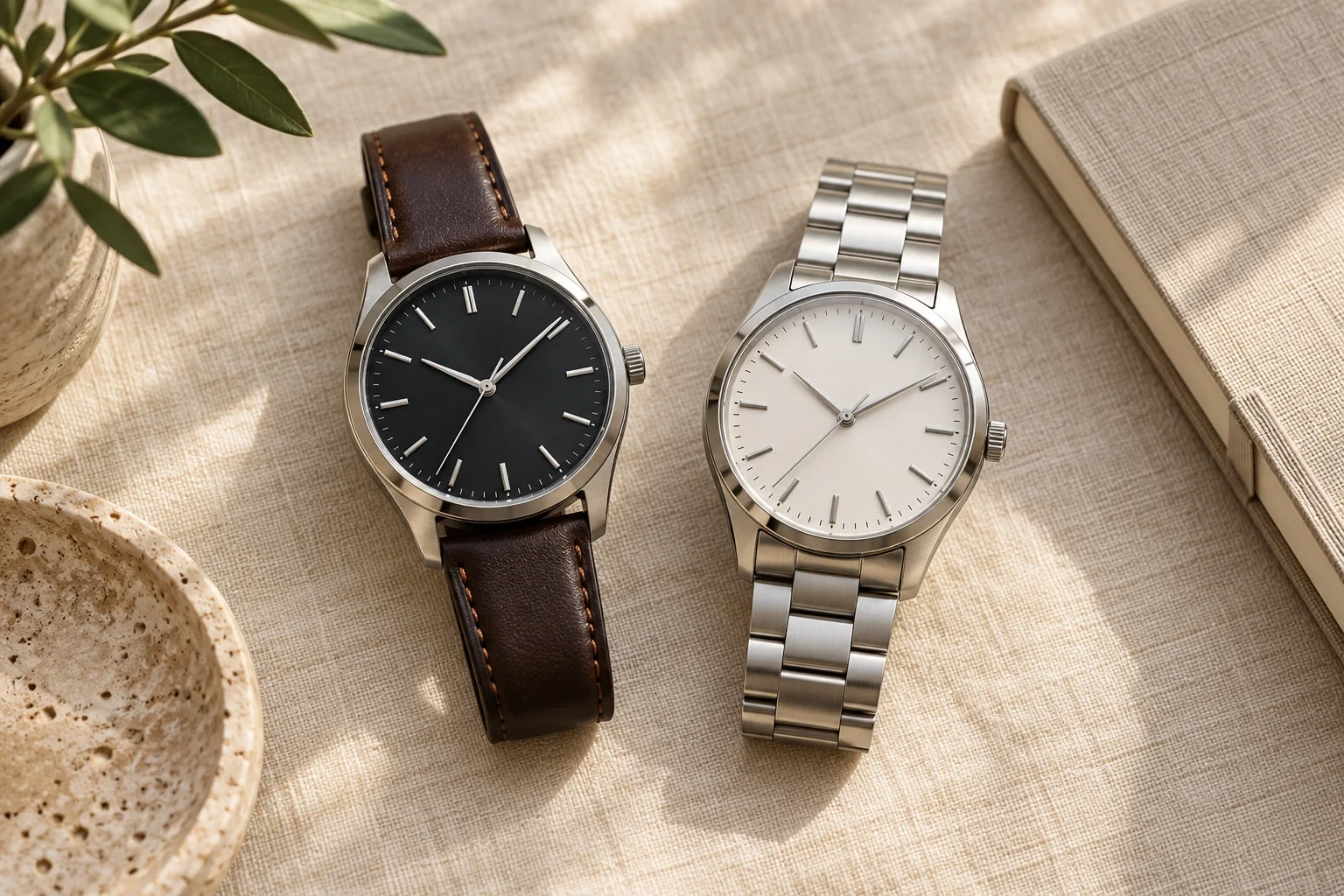
Before paying, retain the full reference, stated caliber, functions, and manual you consulted. Query any conflict between the listing and the documentation. Descriptions such as luxury automatic or high-quality quartz need concrete information to be useful. The conceptual image in this guide cannot identify the movement inside an actual product either.
You can examine available listings in the PakaPuka online shop and consult the platform's frequently asked questions. Check what each product states and distinguish direct purchase from participation in auctions or raffles. This comparison does not establish stock, authenticity, or the terms of an individual watch. Your movement choice still depends on your intended use and the information about that piece.
Frequently asked questions about automatic and quartz watches
Is an automatic always the higher-quality purchase?
The label describes a type of mechanism rather than every aspect of finishing or performance. Compare the reference, materials, functions, and documentation. Enjoying mechanics can justify your own choice without making it a rule that other buyers need to follow.
Does quartz eliminate maintenance costs?
Do not assume so. Read the model's power and service guidance, and establish the scope of each proposed intervention. Care for its case, bracelet, and clasp does not disappear because the watch does not require manual winding.
Do I need accessories to maintain an automatic?
Do not add them to the budget automatically. Begin with the manual and the intended procedure when the watch stops. Consider an accessory after identifying a genuine need and confirming its suitability for the specific movement.
What if I like both types?
Make the comparison around an ordinary week and a typical break between wears. Assess each candidate's preparation and the costs you can confirm. If both meet your requirements, design and enjoyment are legitimate reasons to make the final choice.